

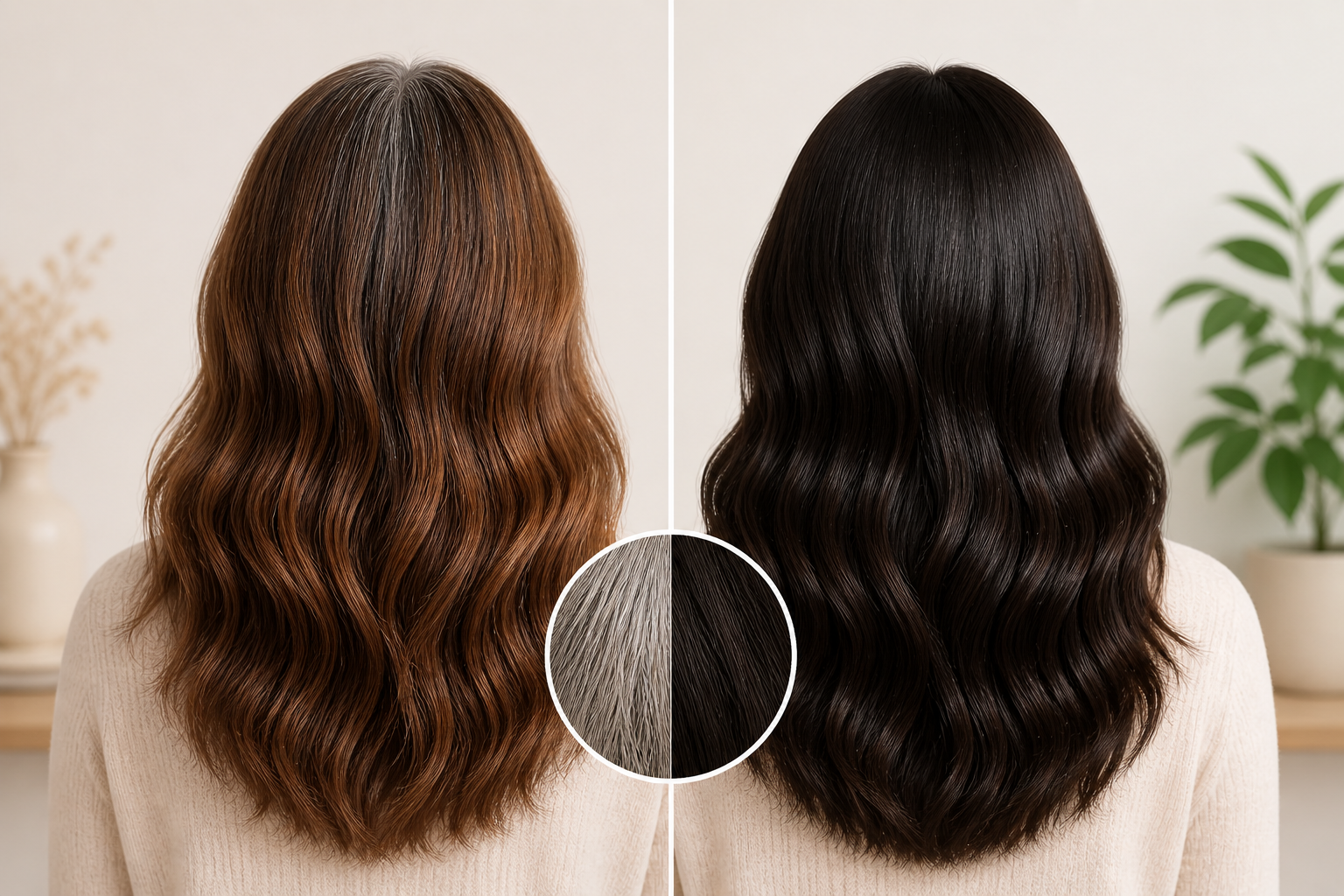
1. Introduction: Not All Gray Hair Solutions Are Created Equal
Walk into any beauty aisle, and you’ll find dozens of products all claiming the same thing: “perfect gray coverage.”
But here’s the reality most people discover too late—not all hair dyes are designed to solve the same problem.
Some are built to blend.Others are built to completely replace your natural pigment.
And if you choose the wrong type, the result is predictable:
- gray hair that still peeks through
- color that fades faster than expected
- or unnecessary damage from over-processing
The real question isn’t “which product is better?”
It’s:Which type of dye is actually designed for your level of gray hair?
This guide breaks down the fundamental differences between semi-permanent and permanent hair color—so you can make a decision based on how these formulas actually work, not how they’re marketed.
2. The Big Showdown: Semi vs. Permanent
Here’s the truth—these two are built for completely different goals.
| Feature | Semi-Permanent | Permanent |
|---|---|---|
| Gray Coverage | Covers ~30–50% (blends, not hides) | 100% coverage (even stubborn grays) |
| Chemistry | No ammonia, low/no peroxide | Uses ammonia + developer to open cuticle |
| Longevity | Fades after 6–12 washes | Doesn’t fade; only roots grow out |
| Hair Damage | Very low (conditioning effect) | Moderate to high with repeated use |
| Finish | Soft, translucent, natural shine | Rich, saturated, uniform color |
| Regrowth Line | Blends naturally | Visible root line over time |
What this really means (not marketing fluff):
-
Semi-permanent = “blur filter” for gray hair
It softens contrast, but doesn’t eliminate grays completely. -
Permanent = “full coverage foundation”
It replaces your natural pigment entirely—this is how you truly erase gray.
3. How to Choose (Based on Real-Life Situations)
Forget generic advice—this is where most people make the wrong call.
Choose Semi-Permanent if:
- Your gray hair is under 20%
- You’re seeing scattered strands, not full sections
- You want zero commitment
- Your hair feels dry, damaged, or overprocessed
- You prefer a natural, dimensional look (not flat color)
Think of it as enhancement, not correction.
Choose Permanent Dye if:
- Your gray hair is over 50%
- You have stubborn grays (especially at temples or hairline)
- You want a uniform, salon-level result
- You don’t want color washing out every few shampoos
- You’re okay maintaining roots every 4–6 weeks
This is the only option if your goal is:
“I don’t want to see any gray at all.”
4. Pro Tips for At-Home Coloring (This Is Where Results Are Won or Lost)
Most bad dye results don’t come from the product—they come from technique.
① Section Like a Professional
Divide hair into 4 clean sections:
- middle part
- ear-to-ear split
Focus first on:
- hairline
- temples
- part line
These areas resist color the most.
② Gray Hair Needs More Time
Gray strands are more resistant due to a tighter cuticle.
- Add 5–10 extra minutes to processing time
- Especially important for permanent dye
Skipping this step = uneven coverage.
③ Don’t Skip the Patch Test
Even “natural” or “ammonia-free” formulas can trigger reactions.
Always test 24–48 hours before use.
This isn’t optional—it’s risk control.
For best gray coverage:
- Start where gray is most visible
- Apply to roots first
- Pull through lengths last (if needed)
This prevents over-processing healthy hair.
5. Final Verdict: It’s Not About “Better”—It’s About Fit
Here’s the honest answer most brands won’t tell you:
- If you want natural blending → go semi-permanent
- If you want complete gray elimination → only permanent works
There is no product that does both perfectly.
If your gray hair still resists color even after choosing the right dye, read this guide:Why Your Gray Hair Won’t Take Color (And the Simple Fix That Actually Works)


