

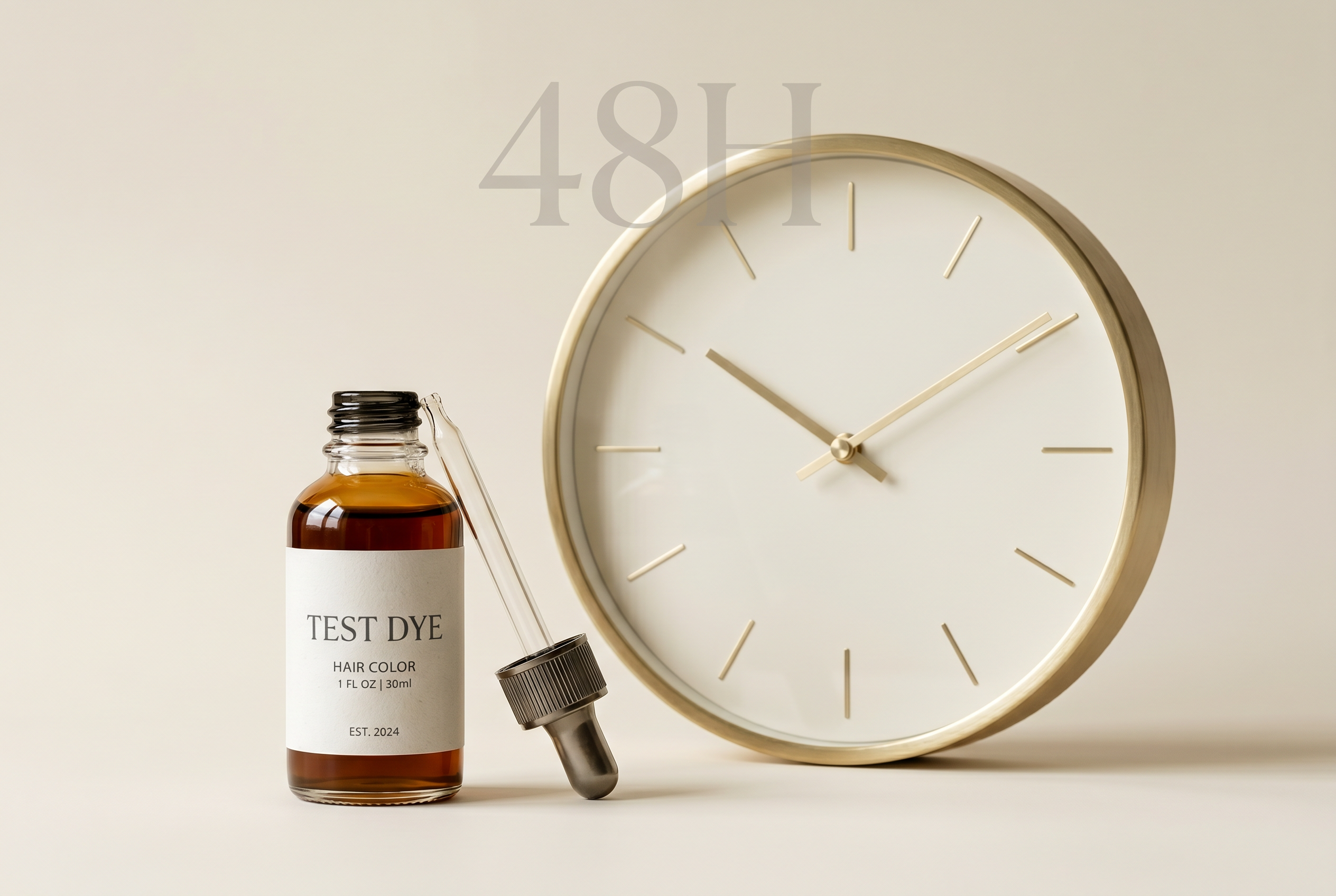
Why 48 Hours Can Make All the Difference
Choosing a hair dye isn't just about the perfect shade; it’s a commitment to your health. Whether you are using a high-end salon brand or a "natural" ammonia-free formula, safety should always be your baseline.
1. The Golden Rule: Why 48 Hours is Non-Negotiable
Many people perform patch tests, but the vast majority do them incorrectly.
The most common mistake: Applying a small amount of dye, waiting 30 minutes, seeing no reaction, and proceeding with the full color.
The Reality: Most allergic reactions to hair dye are "delayed hypersensitivity reactions." This means your immune system may not trigger an alarm until 24 or even 48 hours later. By the time you realize you're allergic, the dye is already on your scalp, and the damage is done.
The 48-hour rule isn't just a suggestion—it’s a vital safety window.
💡 Pro Tip: If you plan to dye your hair on Saturday, your patch test must be completed by Thursday.
2. Step-by-Step Guide: How to Perform a Patch Test Correctly
The process is simple, but details matter. Follow these steps to ensure accurate results:
-
Step 1: Prep and Clean Choose a spot behind your ear or on the inner bend of your elbow. These areas have thinner, more sensitive skin that closely mimics your scalp. Clean the area gently with mild soap and water, then pat dry.
-
Step 2: Precise Mixing If your dye requires mixing (color cream + developer), mix a tiny amount using the exact ratio specified in the instructions. Testing only one component will yield an inaccurate result.
-
Step 3: Application Use a cotton swab to apply a pea-sized amount to the test area. Let it air dry naturally.
-
Step 4: The Waiting Game Do not cover the area with a bandage or adhesive. Keep it dry and exposed for the full 48 hours.
📸 [Insert Image Placeholder]: Close-up photo of a cotton swab applying dye behind the ear with a caption: "Test in a sensitive area for accurate results."
3. Reading the Results: When to Stop Immediately
After 48 hours, you aren't just looking for "pain"—you are looking for subtle skin changes.
-
Green Light: Your skin looks and feels completely normal.
-
Red Light (Stop and Wash Immediately):
-
Visible redness, rash, or blisters.
-
Burning or stinging sensations.
-
Persistent itching.
-
Don't ignore the signs: Many think, "It's just a little red, I'm sure it's fine." In reality, a small local reaction can escalate into severe scalp dermatitis once applied to your entire head.
⚠️ Emergency Warning: If you experience difficulty breathing, dizziness, or facial swelling during the test, seek medical help immediately. These are signs of a severe systemic reaction.
4. Special Advice for Sensitive Skin & Pregnancy
Even if you pass the patch test, I recommend postponing your hair dye session if:
-
Scalp Irritation: You have recent scratches, sores, or inflammation on your scalp.
-
Hormonal Shifts: You are in your first trimester of pregnancy or your skin feels unusually reactive due to stress or seasonal changes.
-
Recent Deep Cleansing: You just performed a heavy scalp exfoliation or "detox," which removes the natural protective oils of your skin barrier.
🛠️ Practical Tip: Take a photo of the ingredient list. If a reaction occurs later, this photo helps doctors quickly identify the specific allergen (like PPD or Resorcinol).
🔗 Related Reading: Build Your Safe Hair Care Routine
Before you start your test, are you sure you’ve chosen the right product? Explore our guide:
-
Part 1: [Ammonia vs. Ammonia-Free: What’s Actually Happening to Your Hair?]
-
Part 2: [The Sensitive Scalp Guide: How to Dye Without Irritation]
-
Part 3: [Coloring During Pregnancy: A Science-Based Safety Guide]
💬 Let’s Talk!
Have you ever experienced itching or discomfort after dyeing your hair? Did you ignore it or take action right away?
Share your experience in the comments below! I’m here to help you analyze potential triggers and find a safer way to achieve your dream look. 👇
Disclaimer: This article is for informational purposes only. If you have a history of severe allergies, always consult with a dermatologist before using chemical hair products.


