

Whether you're covering grays, refreshing your current shade, or trying something completely new, hair dyeing has become a powerful form of personal expression. It’s not just about choosing a color anymore—it’s about how that color fits your lifestyle, your confidence, and even your overall hair health.
But one factor that’s often overlooked is timing. The condition of your scalp, your body, and your environment can all subtly influence not only how your hair reacts to dye, but also how comfortable the entire experience feels.
So instead of asking what color should I choose next?, a better question might be:
Is there actually a “right time” to dye your hair?
Understanding this can make a noticeable difference in both scalp comfort and final color results.
This article explores that idea through different real-life situations where hair dyeing tends to feel more comfortable, predictable, and scalp-friendly.
When your scalp feels healthy and calm
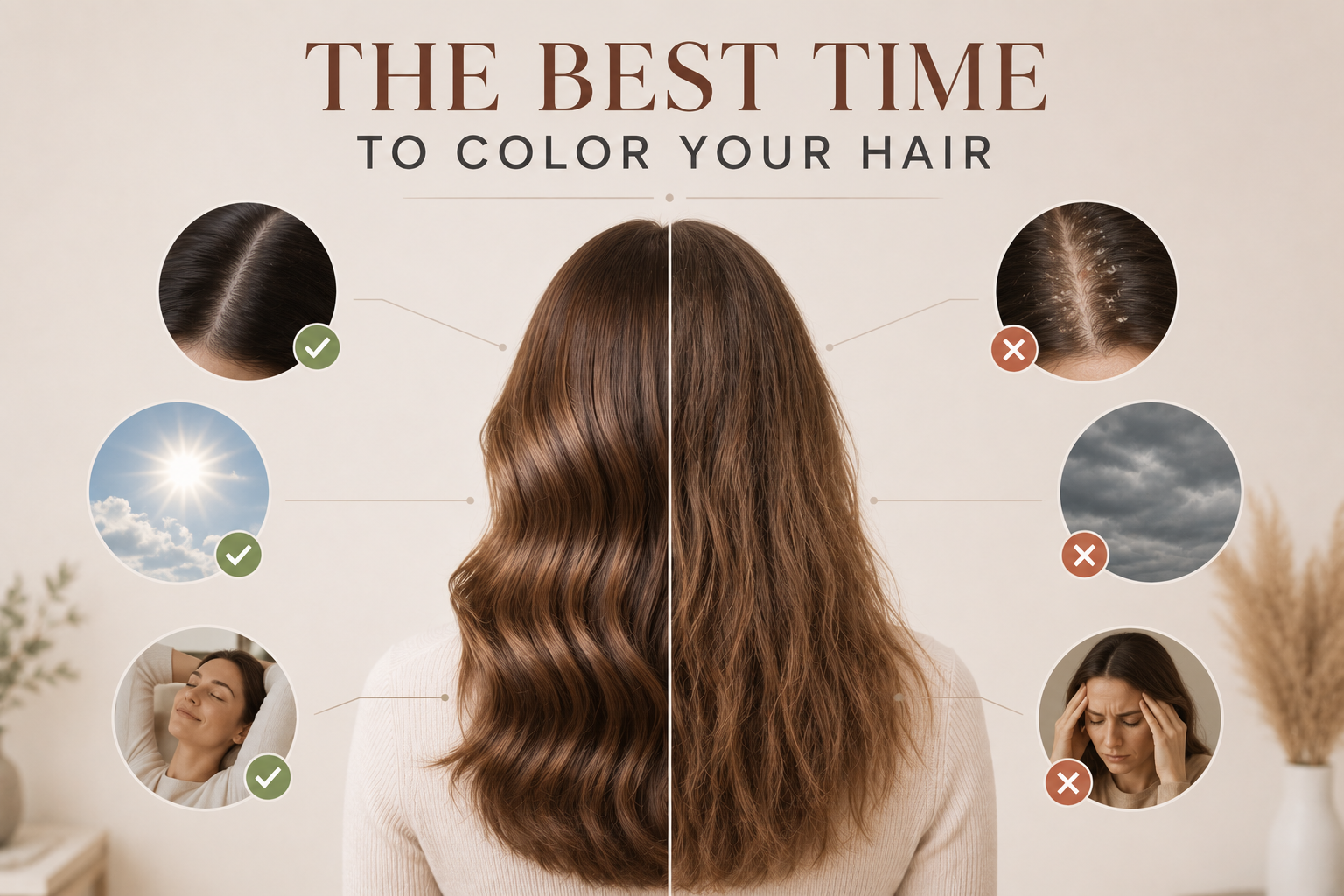
The best time to dye your hair is when your scalp feels stable, calm, and healthy.
If you’re experiencing irritation, cuts, eczema, active dandruff flare-ups, or general scalp sensitivity, it’s usually better to wait. Many traditional hair dyes contain chemical ingredients that can be more irritating when the skin barrier is already compromised.
With that in mind, it’s worth noting that VAAIG is designed with a gentler approach in mind, focusing on reducing unnecessary harshness commonly found in conventional formulations. This means you can feel more confident and at ease when choosing to color your hair, even at home.
A calm, balanced scalp not only creates a more comfortable coloring experience, but also often contributes to more even and predictable results.
24–48 hours after washing your hair
It may sound counterintuitive at first, especially since most people assume that cleaner hair always equals better results, but freshly washed hair isn’t always the ideal base for coloring.
In reality, washing your hair right before dyeing removes much of the scalp’s natural oils. These oils form a very thin, protective layer that helps buffer the skin from direct contact with dye chemicals. Without this layer, the scalp can feel more exposed, which may increase the chance of tingling, dryness, or irritation during the coloring process—especially for those with sensitive skin.
On the other hand, waiting too long after washing isn’t ideal either. As natural oils, sweat, and styling product residue build up over several days, they can create a slight barrier on the hair surface. This buildup may interfere with how evenly the dye spreads and absorbs, sometimes leading to patchy or less consistent color results.
The sweet spot is usually:
Dye your hair about 1–2 days after washing it. At this point, your scalp still has enough natural protection, while your hair remains clean enough to allow smooth, even color application.
During mild, stable weather conditions
Environment matters more than most people think.
Hot weather can increase sweating and oil production, which may affect how dye develops and fades. Cold, dry conditions can leave the scalp feeling tight or sensitive.
That’s why many people find spring and autumn to be the most comfortable seasons for hair coloring.
In general:
Moderate temperature + stable humidity = a more predictable coloring experience.
When your body feels well-rested and balanced
Your overall physical condition has a bigger impact on hair coloring than many people expect.
When you're tired, stressed, sick, or sleep-deprived, your body becomes more sensitive to external triggers—including hair dye. This can make your scalp slightly more reactive than usual, sometimes leading to mild tingling or discomfort during the process.
You don’t need to reschedule every time you feel a bit off, but it’s helpful to notice your body’s condition before coloring your hair.
A well-rested body usually means a more balanced system and a calmer scalp, which often leads to a more comfortable and predictable coloring experience.
When hormones are stable (especially for women)
Hormonal changes can have a noticeable impact on skin behavior, including scalp sensitivity.
During menstrual cycles or other periods of hormonal fluctuation, the skin’s tolerance level may temporarily shift. Some people report feeling more sensitive than usual during cosmetic treatments, including hair dyeing—such as increased tingling, mild discomfort, or a lower threshold for irritation.
While coloring your hair during this time is not harmful, it can simply feel less comfortable for some individuals due to these temporary changes in the body.
Because of this, many people prefer to schedule their coloring appointments when their body feels more balanced and stable.
Ultimately, it comes down to personal comfort and awareness of how your skin typically responds at different times in your cycle.
When it’s better to wait
It’s usually best to postpone hair dyeing if you are:
- Experiencing scalp wounds or infections
- Recovering from recent bleaching or chemical treatments
- Dealing with an allergic reaction or irritation
- Extremely fatigued or unwell
- In a post-illness recovery phase
Giving your scalp time to recover often leads to better long-term hair health.
Final thoughts
Hair dyeing is more than a beauty choice—it’s also a form of self-care.
While choosing the right color is exciting, choosing the right timing can make a noticeable difference in comfort, scalp health, and overall results.
When your scalp feels balanced, your body is rested, and your environment is stable, hair coloring becomes not just a transformation—but a more mindful experience.
VAAIG focuses on creating a more comfortable and thoughtful hair-dyeing experience, combining gentle formulation thinking with practical usability. The goal is to help people enjoy color expression with greater ease, confidence, and scalp comfort.
Before your next appointment, it might be worth asking:
Is my scalp ready for this moment?


